Clinical question
Can an algorithm estimate wound area consistently when clinicians capture photos from different distances?
Study design
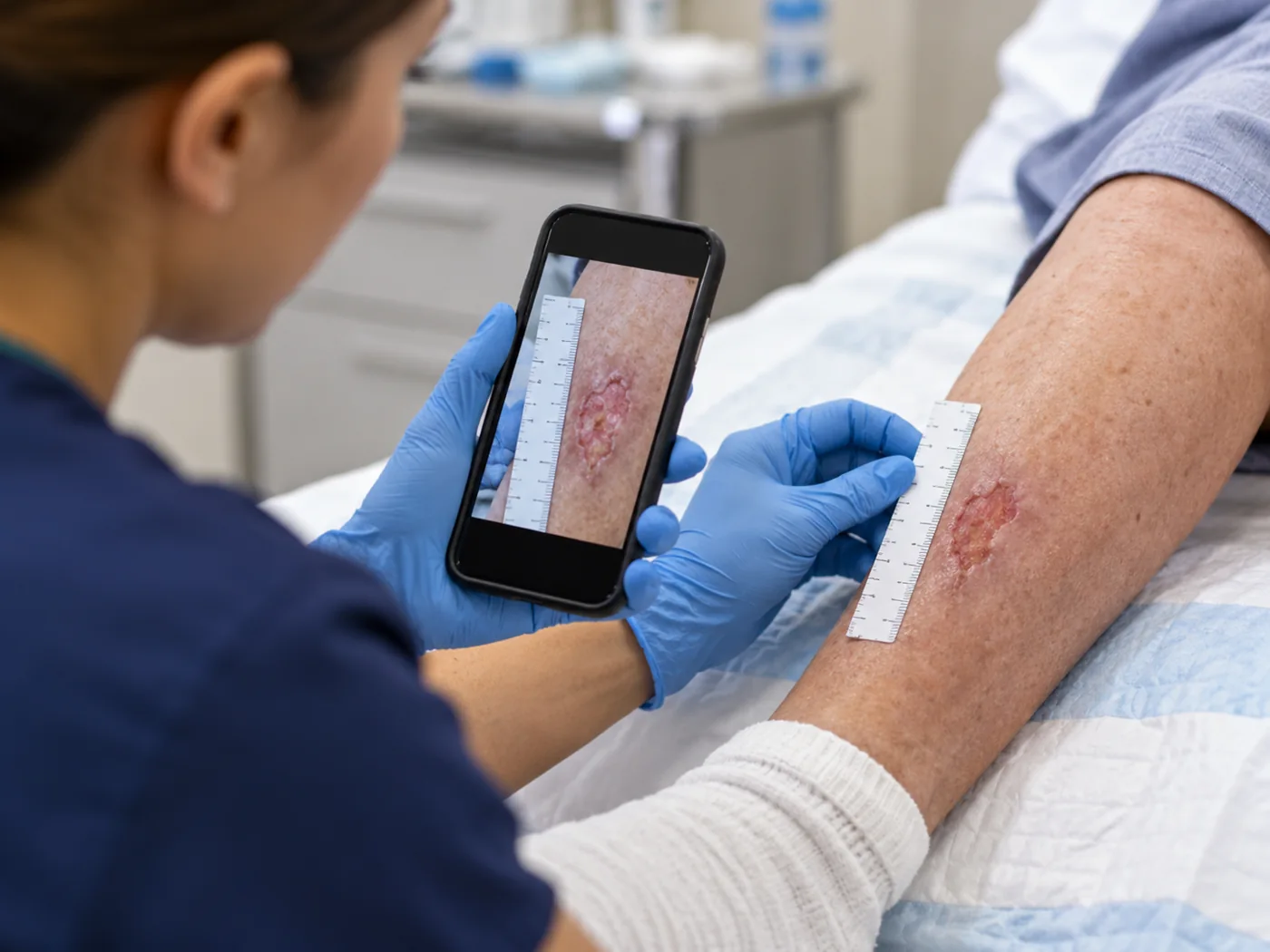
Researchers studied wounds in 40 patients and used K-means image segmentation with a known-size QR reference to convert image pixels to physical surface area. Multiple images of the same wound were taken at different distances.
What the researchers found
Area estimates from repeated captures were highly correlated (Pearson r 0.993–0.997 between repeated image pairs). The study argues for a repeatable protocol using a calibration reference.
Why this matters for MedMeters
MedMeters Wound should prioritize scale, camera-angle instructions, segmentation quality checks and longitudinal comparability before attempting higher-risk wound diagnosis.
What this does not prove
High correlation between repeats does not prove accuracy against a clinical gold standard. The method did not measure wound depth or diagnose infection, and angled photos or low-contrast wound edges remained problematic.
Automated Image-Based Wound Area Assessment in Outpatient Clinics Using Computer-Aided Methods: A Development and Validation Study
Li et al. · Medicina · 2025
DOI: 10.3390/medicina61061099