Clinical question
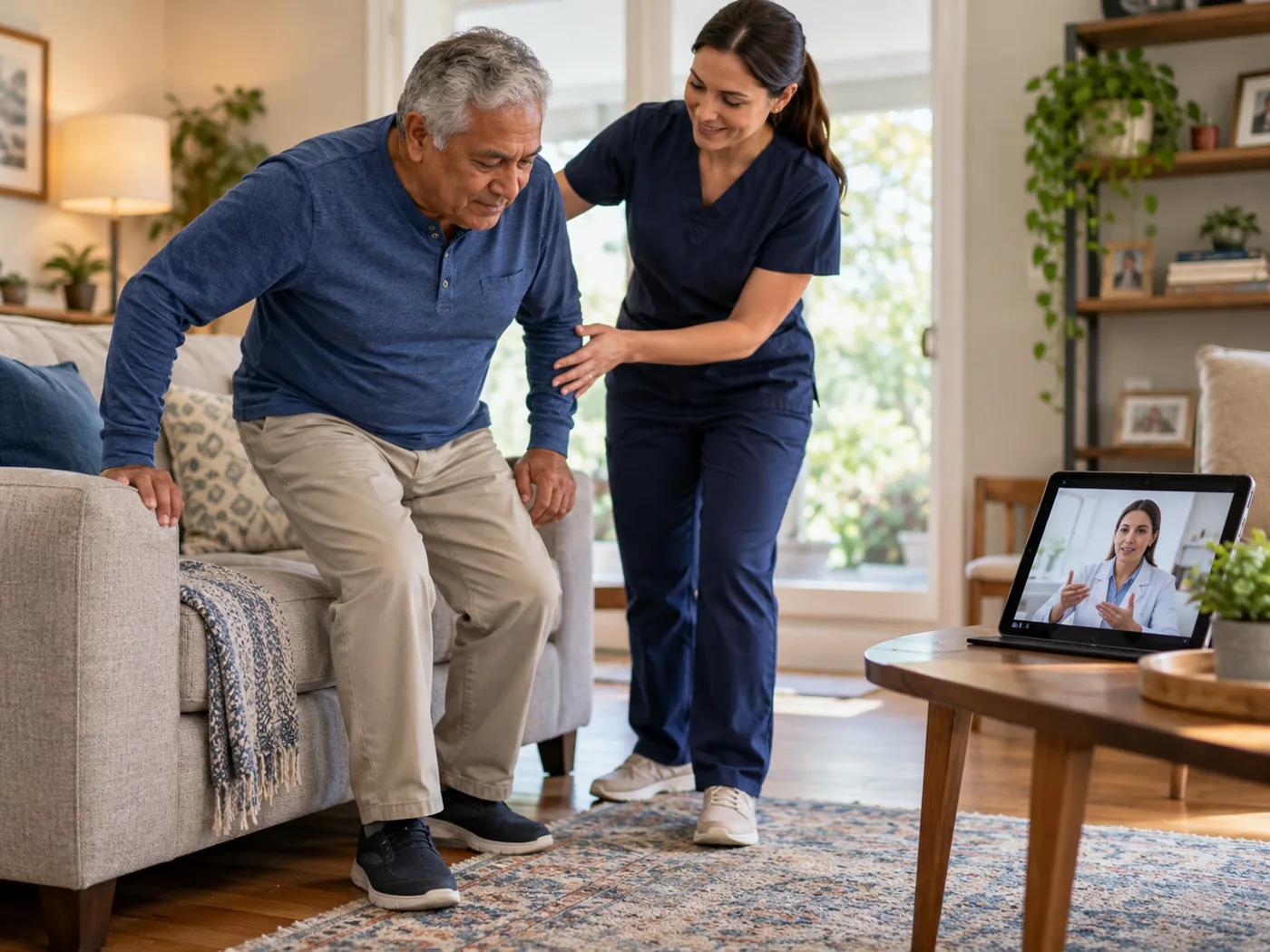
Can older adults repeat established physical-function tests at home during video-guided sessions?
Study design
Nineteen community-dwelling older adults completed nine functional tests during three videoconference sessions, roughly a week apart. Tasks included gait speed, 5xSTS, 30s Sit-to-Stand and balance tests.
What the researchers found
No adverse events were recorded in the study. Test–retest reliability was good for several functional tests (ICC 0.75–0.9), while single-leg balance reliability was poor. Familiarization improved performance and participants reported device-setup barriers.
Why this matters for MedMeters
MedMeters can use these findings to prioritize safer, repeatable home workflows, camera-placement guidance, remote-supervision options and protocol-specific eligibility checks.
What this does not prove
This was a small, supervised feasibility study rather than validation of automated CV scoring. Results must not be generalized to every patient, unsupervised test or home environment.
Remote physical function testing in older adults: a mixed methods study exploring test reliability, feasibility, and perceptions of participants and assessors
Fyfe et al. · PLOS ONE · 2025
DOI: 10.1371/journal.pone.0332691